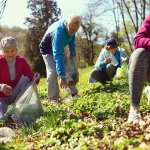
Want to keep your brain healthy as you age?
Regularly volunteer some of your time to your community, neighborhood, friends, or family, according to a new study.
People who regularly lend a hand slow their rate of aging-related brain decline by 15% to 20%, researchers report in the October issue of the journal Social Science & Medicine.
This benefit was consistently observed when people devoted two to four hours a week helping others, researchers said.
Lead researcher Sae Hwang Han, an assistant professor of human development and family sciences at the University of Texas at Austin, stated: “Everyday acts of support — whether organized or personal — can have lasting cognitive impact.”
Han added in a news release: “What stood out to me was that the cognitive benefits of helping others weren’t just short-term boosts but cumulative over time with sustained engagement, and these benefits were evident for both formal volunteering and informal helping. And in addition to that, moderate engagement of just two to four hours was consistently linked to robust benefits.”
Study Details
For the study, researchers tracked more than 31,000 adults in the United States age 51 and older who participated in the federal Health and Retirement Survey between 1998 and 2020.
Key Findings
Results showed that age-related cognitive decline slowed among people who started volunteering, either as part of an organized effort or informally among their neighbors, friends, and family outside the home.
This could include working at a food bank or helping clean up a park, or helping a friend get to a health appointment, babysitting, mowing someone’s lawn, or helping them prepare their taxes, researchers said.
About 1 in 3 older Americans volunteer in a formal manner, while more than half manage to help people in their lives informally, researchers said.
Han noted: “Informal helping is sometimes assumed to offer fewer health benefits due to its lack of social recognition. It was a pleasant surprise to find that it provides cognitive benefits comparable to formal volunteering.”
Long-Term Benefits
Greater gains could be expected among people who make lending a hand part of their routine year after year, researchers said.
Han stated: “Conversely, our data show that completely withdrawing from helping is associated with worse cognitive function. This suggests the importance of keeping older adults engaged in some form of helping for as long as possible, with appropriate supports and accommodations in place.”
Why Volunteering Helps
These benefits are likely due to either boosting a person’s social connections or by lowering their day-to-day stress, researchers said.
Such volunteering can reduce feelings of isolation and loneliness, which have been shown to erode brain power over time.
Han concluded: “Many older adults in suboptimal health often continue to make valuable contributions to those around them, and they also may be the ones to especially benefit from being provided with opportunities to help.”
This research suggests that even modest amounts of helping others—whether through formal volunteering or informal assistance—can serve as a powerful tool for maintaining cognitive health as we age, offering an accessible and socially beneficial approach to brain health preservation.