The annual dilemma returns: What’s the optimal winter heating temperature? Balancing comfort, expenses, and energy efficiency remains a perennial winter challenge, though this year presents unique complications. La Niña—the climate pattern that, alongside its unruly counterpart El Niño—influences weather patterns throughout North America, is making an appearance this winter.
La Niña typically delivers colder, wetter conditions to northern regions, while southern states experience drier weather. However, La Niña’s behavior can be erratic, and regardless of how conditions unfold, you’ll likely need your heating system. With residential electricity costs climbing 6.1% compared to last year, delaying heat usage is tempting—but there’s a limit to layering sweaters. Eventually, heat becomes necessary (perhaps excluding Miami residents), and selecting appropriate winter thermostat settings can generate substantial savings.
Temperature settings represent just the starting point. Below, Josh Balzar, a heating, ventilation and air conditioning (HVAC) specialist with the Frontdoor home services app, discusses heating systems, optimal winter thermostat settings, and the critical thermostat mistake to avoid during cold weather. Get comfortable with a blanket and continue reading.
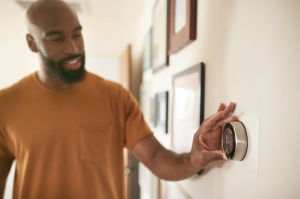
The Common Thermostat Error Homeowners Make
Surprisingly, it’s not setting temperatures excessively high or neglecting to lower them overnight. The mistake is manually engaging emergency or auxiliary heat. Wait—auxiliary heat sounds beneficial! Actually, it’s a terrible choice, according to Balzar. Why? Understanding emergency heat and heat pumps explains the problem.
When your primary heating comes from a heat pump, it includes supplemental heat that activates automatically when the system detects necessity. “The emergency feature will activate when it’s too cold for the heat pump to operate on its own,” Balzar explains. It might engage when outdoor temperatures drop too low for the pump to adequately heat your home or during defrost cycles.
After emergency heat mode activates, electric heat strips within the air handler engage, “resulting in a warmer air supply immediately,” Balzar notes. These dual systems—your main heat pump and supplemental auxiliary heat—collaborate to maintain home warmth. However, manual activation of this thermostat setting disrupts this coordination.
Why Activating This Setting Creates Problems
Manually engaging emergency heat presents several issues, all ultimately costing you money.
During winter, heat pumps draw outdoor air, extract its heat, and distribute warmer air throughout your home. (Summer reverses this process, removing hot indoor air and expelling it outside.) However, when temperatures plummet—around 35 degrees or lower—heat pumps require assistance, which auxiliary heat provides.
Here are three reasons to avoid tampering with this setting:
Higher energy costs
The primary problem with activating auxiliary heat is your rapidly escalating electric bill. “Running just the auxiliary heat setting is very expensive and not cost effective,” Balzar warns.
Heat pumps remain popular because they consume at least 50% less energy than alternative electric heating methods, averaging approximately $500 annual energy cost savings. Activating emergency heat actually deactivates your primary heat pump.
Why does this matter? That emergency heat originates from electric heat strips—basic heating elements resembling those in toasters. Imagine heating your entire house with a toaster. That’s expensive.
“Electric heat strips use a lot of electricity to get hot, so your electric bill will be significantly higher,” Balzar explains.
System inefficiency
Another reason to avoid manually activating emergency heat is that your heat pump wasn’t designed for this usage.
“Your system is programmed to only use the auxiliary heat when it’s too cold or when it’s in defrost mode,” Balzar states. These represent temporary situations, not extended operations, and the heat pump determines when it requires additional support. Manual auxiliary setting activation overrides the system’s intelligence and negates the heat pump’s purpose.
Balzar recommends allowing your HVAC system to operate as designed, “with all modes of heating working in unison as intended.” When questioned about appropriate emergency heat usage, Balzar responds directly: “No, only if your heat pump has failed.”
Wear and tear
While Balzar notes that using auxiliary heat typically doesn’t damage your heat pump—electric heat strips deliver hotter air than the heat pump alone, but the system handles it—and using supplemental heat appropriately “has no negative effect on the HVAC system itself,” Balzar confirms.
Manual activation remains inadvisable. Heat pump manufacturers clearly state: It’s unnecessary and potentially harmful. You’re placing the entire home heating burden on something designed for temporary use. Even without continuous month-long or year-long operation, it could accelerate system wear.
The Financial Cost of This Mistake
Costs vary based on location, electricity rates, and additional factors, but they’re substantial. Purely resistive heat, like heat pump heat strips, operates at 100% efficiency. Every energy unit converts to heat. Conversely, heat pumps achieve 300% efficiency, generating three times more heat than the energy required to operate them.
Therefore, regardless of location and energy prices, operating your heat pump in auxiliary mode costs three times more.
Does Every Thermostat Include This Setting?
No. According to Balzar, only thermostats controlling heat pumps feature this setting, which makes sense since other heating systems—from gas furnaces to hot-water radiators—neither have nor typically require supplemental heat functionality.
Must You Deactivate This Setting After Activation?
Balzar confirms: “If you turned it on,” he states, “you need to turn it back off.”
This won’t physically strain the system. However, it saves money by returning the system to its standard (and economical) setting. During normal operation, the heat pump cycles between settings as needed, but manual emergency heat mode engagement maintains that setting until you change it.
What’s the Ideal Winter Heating Temperature?
Experts identify 68 degrees as the ideal indoor temperature and optimal winter thermostat setting. While personal preferences allow adjustments, this represents the standard recommended winter thermostat setting balancing efficiency and comfort.
What to Do When Your House Feels Cold
If you’re shivering and relying on space heaters this winter, consider these steps:
Seal cracks and drafts. My front door leaked considerable air. After temporarily covering the gap with a blanket, I applied weather stripping, significantly improving the situation.
Close unneeded vents. My living room features high ceilings, making upstairs temperatures ten times warmer than downstairs. Closing upstairs vents helps.
Switch your ceiling fans. Fans are directional and should push heat downward during winter. As fall temperatures drop, adjust your fans to spin clockwise.
Add insulation. Did your home inspector recommend adding attic insulation during purchase? Did you follow through? It’s worthwhile.
Call a technician. Optimal winter heating temperatures balance personal comfort with energy efficiency. If your heater underperforms, consult an expert about the issue.