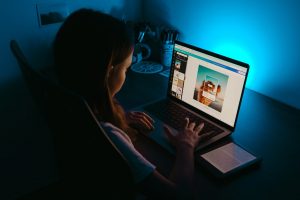
A TikTok video shows a teenage girl in braces applying a series of 14 beauty products to her face, an arsenal costing nearly $350 in total.
It’s one of many such videos where girls share their beauty regimens—but then something goes wrong.
The girl states: “This is what my skin looks like. It is very glowy right now, I love it! But also, I just had some allergic reaction to something that I tried, so ignore how red my face is,” as her skin turns crimson and inflamed.
She continues: “I don’t know what’s happening. But if anybody knows how to get it to stop burning, that would be greatly appreciated, because it actually hurts a lot.”
This real-life example captures the genuine risks lurking behind the glamor of “get ready with me” TikTok videos, researchers argue in a new study.
Study Findings
Popular TikTok videos featuring teens’ personal skincare routines frequently showcase products carrying high risks of skin irritation and allergy, researchers reported on June 9 in the journal Pediatrics.
The top-viewed videos contained an average of 11 potentially irritating active ingredients, researchers found.
These could cause higher risk of skin irritation, sun sensitivity, and full-blown allergic reactions, researchers said.
Lead investigator Dr. Molly Hales, a postdoctoral research fellow in dermatology at Northwestern University Feinberg School of Medicine, stated in a news release: “That high risk of irritation came from both using multiple active ingredients at the same time, such as hydroxy acids, as well as applying the same active ingredient unknowingly over and over again when that active ingredient was found in three, four, five different products.”
In another video noted in the study, a teenager applied 10 products to her face in six minutes.
Senior researcher Dr. Tara Lagu, an adjunct lecturer of medicine and medical social sciences at Northwestern University, noted in a news release: “As she’s applying the products, she begins to express discomfort and burning, and in the final few minutes, she develops a visible skin reaction.”
Research Methodology
For the study, Hales and Lagu each created a TikTok account reporting their age as 13.
The “For You” tab made recommendations, and the researchers liked and saved videos featuring youth skincare regimens.
As a result, the TikTok algorithm sent more and more similar suggestions, until the researchers had collected a combined total of 100 videos from 82 creators.
About a third of the videos (31%) featured girls 13 and younger, and the rest featured 14- to 18-year-olds.
Cost and Product Analysis
The girls’ regimens featured an average of six products costing an estimated $168 on average, researchers said. In some videos, girls presented arrays of products costing more than $500.
Taking a closer look, researchers found that the 25 most-viewed videos featured products containing an average of 11 potentially irritating active ingredients. Some carried as many as 21.
The most common active ingredients across all products were alpha-hydroxy acids (AHAs) like citric acid, lactic acid, and glycolic acid. Citric acid was the most common ingredient, found in 29% of all products.
AHAs help treat acne but can cause skin irritation in girls without acne, “particularly when multiple such products are used together,” researchers wrote. AHAs and beta-hydroxy acids also increase sun sensitivity risk.
More than half of all products also contained added fragrance, which can cause irritation and allergic reactions, researchers said.
Worse, only 26% of the portrayed skincare regimens contained sunscreen, which is important for skin health, researchers noted.
Broader Concerns
Overall, the videos portray expensive and time-consuming regimens that “encourage young girls to pursue unattainable ideals of physical perfection under the guise of ‘self-care,’ ” researchers wrote.
Many videos in the “Get Ready With Me” genre show girls waking as early as 4:30 a.m. to get ready for school through multistep makeup routines, researchers noted.
Hales stated: “It’s problematic to show girls devoting this much time and attention to their skin. We’re setting a very high standard for these girls.”
Racial Implications
These videos also portray a coded vision of beauty emphasizing whiteness, using words like “porcelain,” “glowy,” and “glassy” in an aspirational way, researchers wrote.
Lagu noted: “We saw that there was preferential, encoded racial language in some cases that really emphasized lighter, brighter skin.”
Hales agreed, stating: “The pursuit of health has become a kind of virtue in our society, but the ideal of ‘health’ is also very wrapped up in ideals of beauty, thinness and whiteness. The insidious thing about ‘skin care’ is that it claims to be about health.”
This research highlights serious concerns about social media’s influence on young girls’ skincare habits, revealing both physical health risks from inappropriate product use and psychological pressures from unrealistic beauty standards promoted through these viral videos.